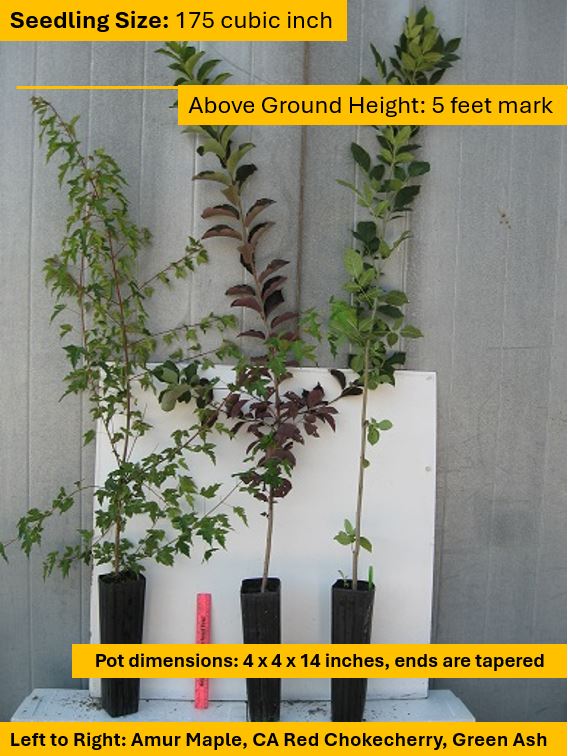
*ORDERING QUANTITIES - our seedlings are sold in bulk*
10 - 27 cu. in. seedlings are sold in bundles of 24 (1 unit = 24 seedlings)
100 & 175 cu. in. seedlings are sold in bundles of 9 (1 unit = 9 seedlings)
Robinia pseudoacacia
Natural Habitat: Open woodlands, forest edges, riparian corridors, disturbed sites, roadsides, and old fields; native to the Appalachian and Ozark regions and widely naturalized across North America.
Foliage / Flowers: Compound blue-green leaves; fragrant, drooping clusters of white to creamy white pea-like flowers in late spring.
Light Requirements: Full sun to partial shade
Growth Rate: Fast
20-Year Height: Approximately 30–50 feet
Elevation Range: Up to 6,000 ft
Cold Hardiness: Zones 4–8
Wind Tolerance: Moderate; flexible branches tolerate wind but brittle wood may break in severe storms
Soil Preference: Adaptable to many soil types including sandy, rocky, and poor soils; prefers well-drained sites; intolerant of prolonged saturation
Alkali / Saline Soil Tolerance: Low to moderate
Life Span: Approximately 60–100 years (often shorter in harsh or urban conditions)
Minimum Annual Precip: Approximately 20–40 inches
Drought Tolerance: Moderate once established
Windbreak Spacing: 8–12 feet between trees (single row); 10–15 feet if mixed with other species
Potential Pests / Disease: Locust borer, locust leaf miner, heart rot, canker diseases
Deer Resistance: Low to moderate (young growth commonly browsed)
Wildlife Value:
• Excellent nectar source for pollinators, especially honeybees
• Seeds consumed by birds and small mammals
• Provides cover and nesting habitat
• Nitrogen-fixing roots improve soil fertility