DNRC Montana Conservation Seedling Nursery
Booth Willow
Booth Willow
Out of stock
Natural Habitat: Common along streams, wet meadows, floodplains, seeps, and high-elevation riparian corridors with cold, moist soils and seasonal flooding.
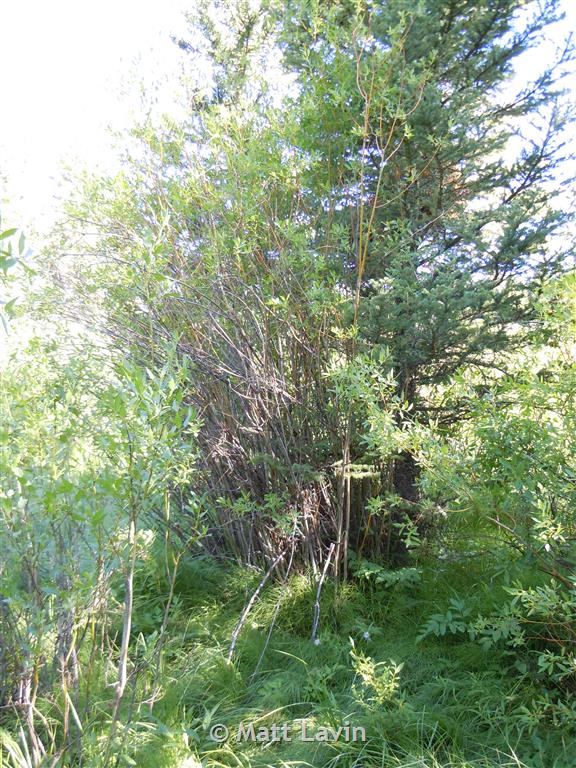
Foliage / Flowers: Deciduous multi-stem shrub with narrow oval to lance-shaped green leaves, lighter beneath. Produces early spring catkins before or with leaf emergence; male and female flowers occur on separate plants and are highly attractive to pollinators.
Light Requirements: Full sun to partial shade
Growth Rate: Fast
20-year Height: 10–20 feet tall; spread 10–15 feet
Elevation Range: 4,000–10,000 feet
Cold Hardiness: Zone 2–6
Wind Tolerance: High, flexible stems tolerate wind, snow loading, and exposure well
Soil Preference: Prefers moist to saturated soils; tolerates clay, silt, loam, and organic soils. Performs best where groundwater is accessible or seasonal flooding occurs.
Alkali / Saline Soil Tolerance: Low tolerance
Life Span: 30–60+ years
Minimum Annual Precipitation: 18–25 inches or sites with consistent groundwater
Drought Tolerance: Low, requires reliable soil moisture
Windbreak Spacing: Not typically used as a windbreak species; spacing 5–8 feet for riparian stabilization or dense screening plantings.
Potential Pests / Disease: Willow leaf beetles, aphids, sawflies, rusts, and cankers; generally resilient when planted in suitable moisture conditions.
Deer Resistance: Low, highly palatable to deer, elk, moose, and beaver.
Wildlife Value:
• Excellent early-season nectar and pollen source for native pollinators
• Important browse species for big game and beaver
• Provides nesting habitat and cover for birds
• Stabilizes streambanks and improves aquatic habitat