DNRC Montana Conservation Seedling Nursery
Cotoneaster - Centennial Variety
Cotoneaster - Centennial Variety
Out of stock
*ORDERING QUANTITIES - our seedlings are sold in bulk*
10 - 27 cu. in. seedlings are sold in bundles of 24 (1 unit = 24 seedlings)
100 & 175 cu. in. seedlings are sold in bundles of 9 (1 unit = 9 seedlings)
--------------------------------------------------------------
Native to: Europe/ Asia
Natural Habitat: Originally derived from Eurasian cotoneaster species; ‘Centennial’ was selected in the northern Great Plains for use in shelterbelts, reclamation sites, roadsides, and urban landscapes. Performs well in open, exposed sites with cold winters and moderate moisture.
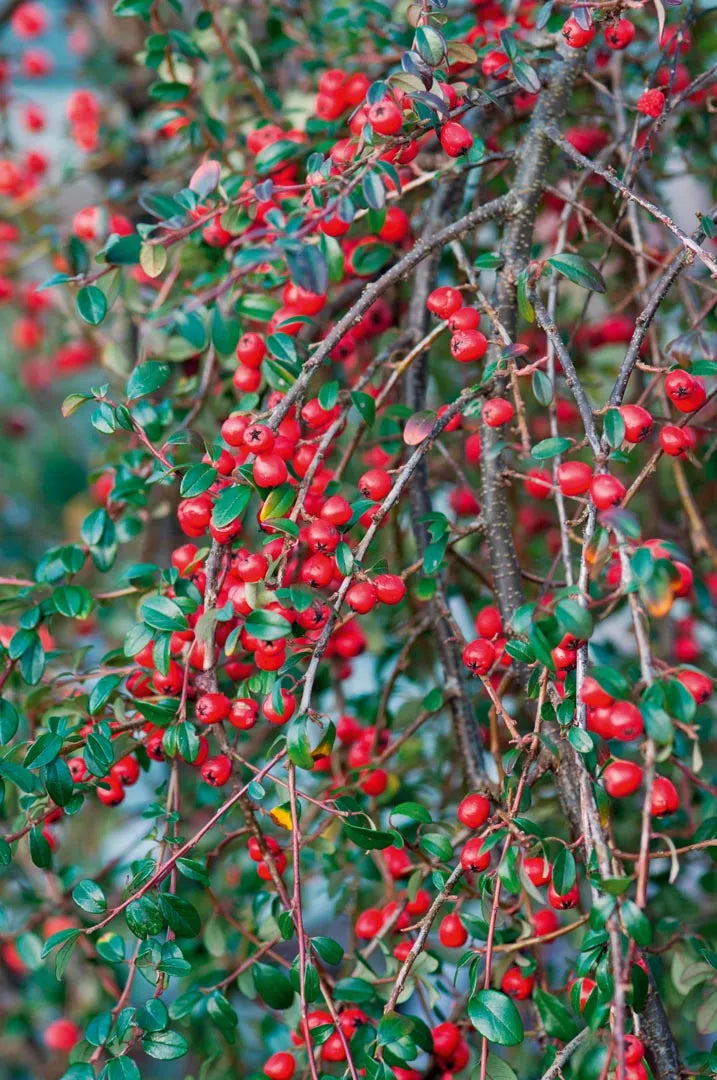
Foliage / Flowers: Semi-evergreen to deciduous shrub. Small glossy green leaves turning reddish-bronze in fall. White to pale pink flowers in late spring followed by abundant bright red berries persisting into winter.
Light Requirements: Full sun to partial shade
Growth Rate: Moderate
20-year Height: 3–6 feet tall; spreads 6–10 feet wide (low, arching form)
Elevation Range: Up to 6,000 feet.
Cold Hardiness: Zone 3–7
Wind Tolerance: High, very tolerant of exposed and windy sites
Soil Preference: Adaptable; prefers well-drained loam or sandy soils but tolerates clay and poor soils once established.
Alkali / Saline Soil Tolerance: Moderate tolerance
Life Span: 30–50+ years with proper site conditions
Minimum Annual Precipitation: 12–14 inches
Drought Tolerance: Moderate to high once established
Windbreak Spacing: 4–6 feet between plants in a single row for dense coverage
Potential Pests / Disease: Susceptible to fire blight, leaf spot, spider mites, aphids, and scale insects in stressed conditions
Deer Resistance: Moderate, may experience browsing when food is limited.
Wildlife Value:
• Excellent winter food source for birds and small mammals (persistent berries)
• Provides dense cover and nesting habitat
• Pollinator resource during bloom