DNRC Montana Conservation Seedling Nursery
Daniel's Cottonwood (Cottonless)
Daniel's Cottonwood (Cottonless)
Out of stock
Native to Montana
*ORDERING QUANTITIES - our seedlings are sold in bulk*
10 - 27 cu. in. seedlings are sold in bundles of 24 (1 unit = 24 seedlings)
100 & 175 cu. in. seedlings are sold in bundles of 9 (1 unit = 9 seedlings)
--------------------------------------------------------------
Populus deltoides
Native species bred to not produce cotton
Natural Habitat: Native to North America. Naturally occurs along rivers, streams, floodplains, and moist bottomlands. ‘Daniels Cottonless’ is a selected male clone adapted for windbreaks and landscapes where seed cotton is undesirable.
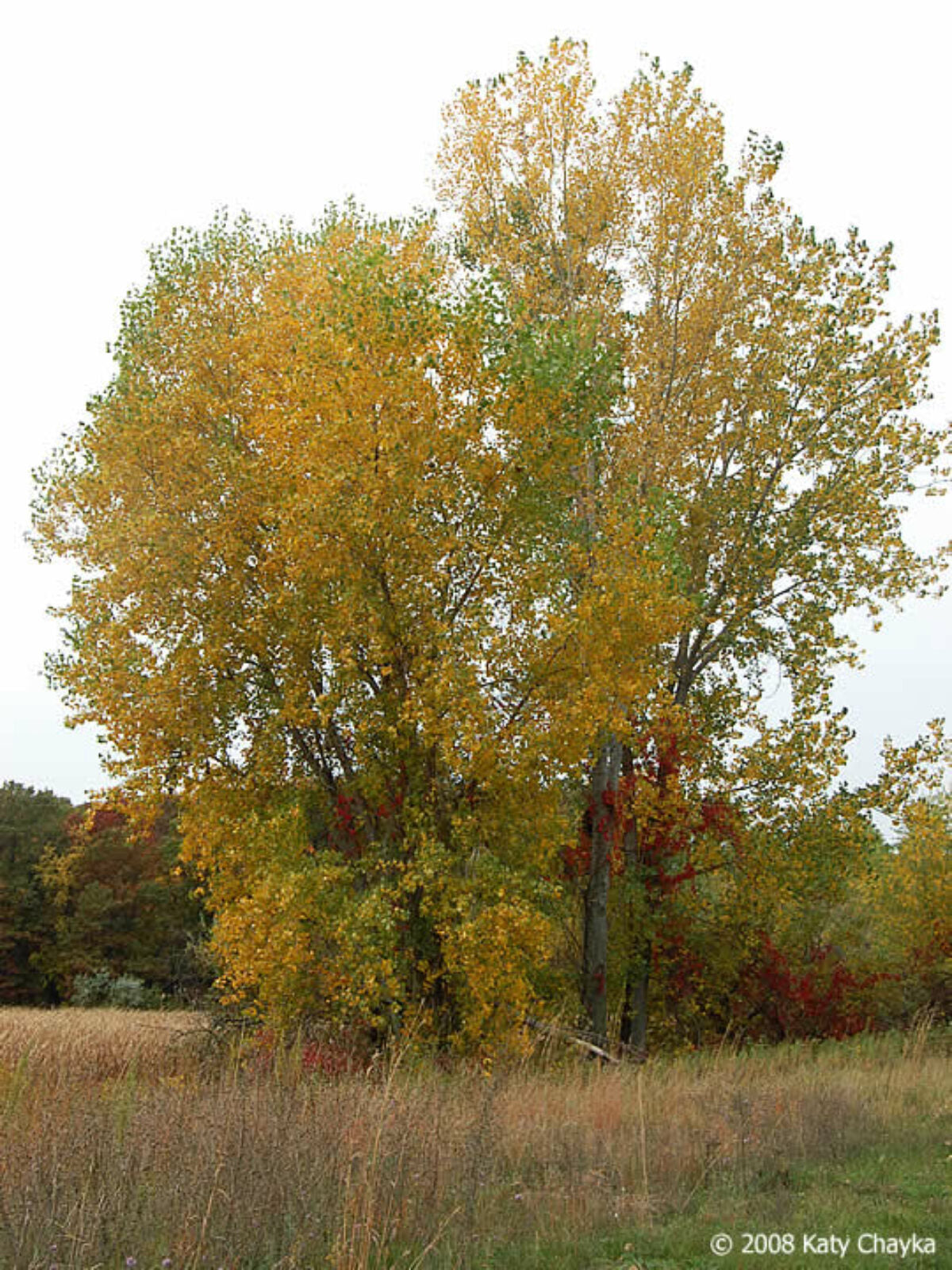
Foliage / Flowers: Large triangular green leaves with coarse teeth; bright yellow fall color. Male clone, produces pollen catkins but no cottony seed.
Light Requirements: Full sun
Growth Rate: Fast to very fast
20-year Height: 50–70 feet tall (with 30–50 ft spread depending on spacing and site quality)
Elevation Range: Up to 6,500 feet
Cold Hardiness: Zone 3–8
Wind Tolerance: High, commonly planted for windbreaks and shelterbelts
Soil Preference: Prefers deep, moist, well-drained loams or sandy alluvial soils; tolerates heavier clays if moisture is adequate. Performs poorly on shallow or droughty sites
Alkali / Saline Soil Tolerance: Low to moderate tolerance
Life Span: 40–75 years (shorter in harsh or dry sites)
Minimum Annual Precipitation: 16–18 inches (supplemental irrigation improves establishment and growth)
Drought Tolerance: Low to moderate, requires consistent moisture, especially during establishment
Windbreak Spacing: 12–16 feet between trees within rows; 20–30 feet between rows if multi-row planting
Potential Pests / Disease: Susceptible to leaf rusts, cankers, cytospora, cottonwood borer, aphids, and leaf beetles; breakage possible in severe wind or ice
Deer Resistance: Low, highly palatable to deer and livestock when young
Wildlife Value:
• Provides nesting habitat for birds
• Valuable shade and riparian stabilization
• Buds and twigs browsed by wildlife
• Pollinator support via early-season pollen