DNRC Montana Conservation Seedling Nursery
Douglas-fir (West)
Douglas-fir (West)
Out of stock
*ORDERING QUANTITIES - our seedlings are sold in bulk*
10 - 27 cubic inch (ci) seedlings are sold in bundles of 24 (1 unit = 24 seedlings)
100 & 175 cubic inch (ci) seedlings are sold in bundles of 9 (1 unit = 9 seedlings)
-----------------------
Pseudotsuga menziesii
Natural Habitat: Moist montane and coastal-influenced forests, north and west facing slopes, deep valleys and mixed conifer stands
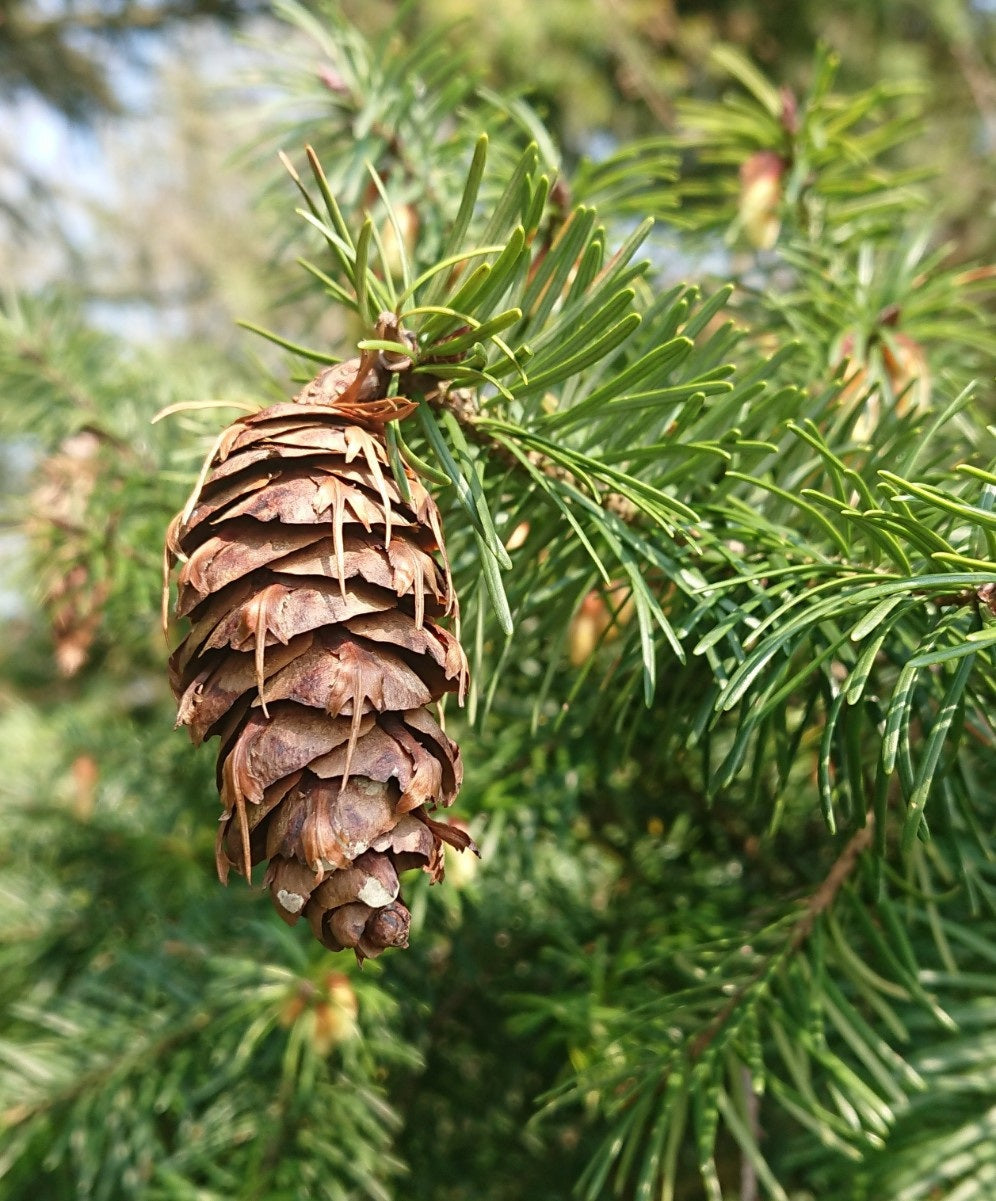
Foliage / Flowers: Evergreen tree with single flattened needles 1-1.5 in long, dark green with a pleasant citrus-like scent. Pollen cones appear in spring. Seed cones are 2-4 in long with distinctive three-lobed bracts.
Light Requirements: Full sun to partial shade
Growth Rate: Moderate to fast
20-year Height: 20-35 ft depending on moisture and soil quality
Elevation Range: Typically 2,000-5,500 ft west of the Continental Divide
Cold Hardiness: USDA Zones 4 to 6
Fire Tolerance: Moderate, thick bark on older trees improves survival during low-intensity fires
Wind Tolerance: Moderate to high, becomes more wind-firm with age
Soil Preference: Deep, moist, well-drained loams or sandy loams, prefers sites with higher organic content
Alkali / Saline Soil Tolerance: Low
Life Span: Often 300-500 years or more
Minimum Annual Precip: Performs best with 20-40 in of annual precipitation
Drought Tolerance: Low to moderate, prefers consistent soil moisture
Windbreak Spacing: 10-16 ft
Potential Pests / Disease: Douglas-fir tussock moth, bark beetles, needle cast, root rot
Deer Resistance: Low to moderate, seedlings often browsed
Wildlife Value:
- Seeds eaten by squirrels, songbirds and small mammals
- Supports caterpillars, beetles and other insects used by forest birds
- Provides excellent cover, nesting habitat and thermal protection
- Mature trees offer roosting and cavity sites for birds and mammals