DNRC Montana Conservation Seedling Nursery
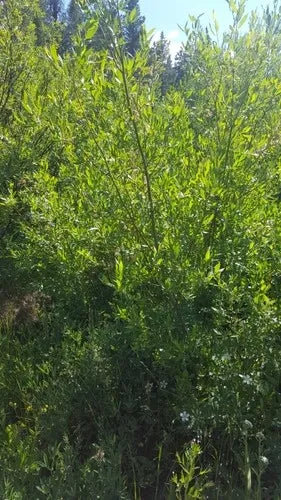
Drummond's Willow
Drummond's Willow
Out of stock
*ORDERING QUANTITIES - our seedlings are sold in bulk*
10 - 27 cu. in. seedlings are sold in bundles of 24 (1 unit = 24 seedlings)
100 & 175 cu. in. seedlings are sold in bundles of 9 (1 unit = 9 seedlings)
-----------------------------------------------
Salix drummondiana
Natural Habitat: Native to the Rocky Mountains and Intermountain West. Common in subalpine and montane zones along streams, wet meadows, seeps, lake margins, and avalanche chutes. Often found in cold, moist soils with snowmelt-driven moisture.
Foliage / Flowers: Deciduous multi-stem shrub with broad oval to elliptic green leaves, often slightly hairy beneath. Produces early spring catkins before or with leaf emergence; male and female plants are separate and provide important early pollen and nectar resources.
Light Requirements: Full sun to partial shade
Growth Rate: Moderate to fast
20-year Height: 6–15 feet tall; spread 6–12 feet
Elevation Range: 5,000–11,000 feet
Cold Hardiness: Zone 2–5
Wind Tolerance: High, tolerant of cold exposure, wind, and snow loading
Soil Preference: Prefers moist to saturated soils; performs well in silty, loamy, and organic soils. Tolerates seasonal flooding and cold soils
Alkali / Saline Soil Tolerance: Low tolerance
Life Span: 30–60+ years
Minimum Annual Precipitation: 20–30 inches or consistent snowmelt and groundwater input
Drought Tolerance: Low, requires consistent soil moisture
Windbreak Spacing: Not used for windbreaks; spacing 4–8 feet for riparian stabilization or dense shrub establishment.
Potential Pests / Disease: Willow leaf beetles, aphids, sawflies, rusts, and cankers; generally low impact when planted in appropriate sites.
Deer Resistance: Low, highly palatable browse for deer, elk, moose, and beaver.
Wildlife Value:
• Critical early-season pollen and nectar source for native pollinators
• Important browse species for big game and beaver
• Provides nesting and cover for birds and small mammals
• Stabilizes streambanks and supports cold-water aquatic systems