DNRC Montana Conservation Seedling Nursery
Mix - Forest Meadow (Seed)
Mix - Forest Meadow (Seed)
Out of stock
Ecoregions: 15 - 17 (Level III)
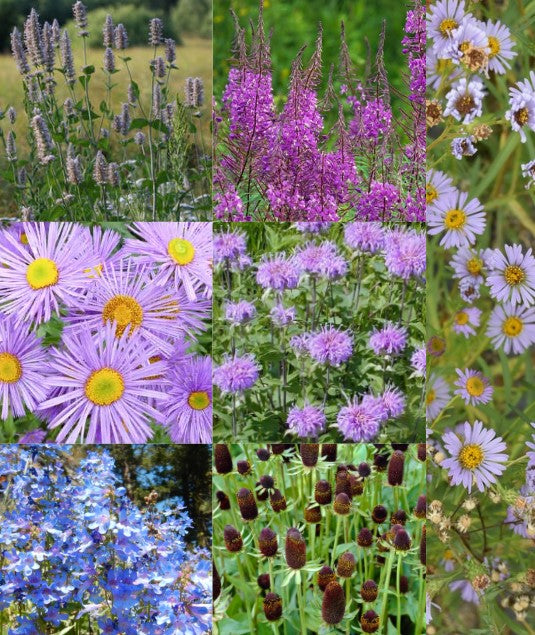
This Forest Meadow Mix is a diverse blend of native forbs adapted to open forests, meadow edges, and partially shaded sites. Bloom begins in late spring and continues through summer into early fall, providing season-long color and reliable forage for pollinators, including native bees, butterflies, and hummingbirds. Designed for full sun to partial shade and well-drained to moderately moist soils.
Mix Composition
9% Agastache urticifolia (Giant hyssop)
2% Chamerion angustifolia (Fireweed)
11% Erigeron speciosus (Showy fleabane)
41% Monarda fistulosa (Beebalm)
7% Penstemon albertinus / wilcoxii (Alberta & Wilcox's penstemon)
1% Rudbeckia occidentalis (Western coneflower)
27% Symphyotrichum laeve (Smooth blue aster)
Natural Habitat: Dry to moderately moist grasslands, open meadows, forest edges. This mix is well suited to open, sunny sites, partially shady and transitional habitats.
Life Cycle: Perennial
Rhizomatous: Mixed (includes both clump-forming and rhizomatous species)
Light Requirements: Full sun to partial shade
Bloom Time: Late spring through early fall
Bloom Color: Purple, lavender, pink, blue, white.
Height: 12 to 60 inches
Elevation Range: Up to approximately 8,000 ft
Cold Hardiness: Zone 3 – 7
Soil Preference: Adaptable to a range of well-drained soils including sandy, loamy, and rocky substrates. Some species tolerate moderately moist conditions, while others prefer drier soils; overall best performance occurs in well-drained sites.
Alkali/Saline Soil Tolerance: Moderate tolerance to alkaline soils; low tolerance for saline soils.
Minimum Annual Precipitation: 12 – 20 inches
Drought Tolerance: Moderate to high once established
Disturbance: Establishes well in disturbed areas such as roadsides, clearings, and reclamation sites, while also persisting in stable grassland and meadow communities.
Potential Pests/Disease: Generally low pest and disease pressure. Some species may be susceptible to powdery mildew in humid or poorly ventilated sites.
Deer Resistance: Low to moderate (varies by species)
Wildlife Value:
• Provides season-long nectar and pollen for a wide range of pollinators, including native bees, butterflies, moths, and hummingbirds