DNRC Montana Conservation Seedling Nursery
Plains Cottonwood
Plains Cottonwood
Out of stock
*ORDERING QUANTITIES - our seedlings are sold in bulk*
10 - 27 cu. in. seedlings are sold in bundles of 24 (1 unit = 24 seedlings)
100 & 175 cu. in. seedlings are sold in bundles of 9 (1 unit = 9 seedlings)
--------------------------------------------------------------
Populus deltoides
MITOSIS- Montana Interagency Tree Or Shrub Improvement Study. This study was a cooperative effort to evaluate the performance of various species of plants in established Montana plantings. The selected plantings were evaluated for over ten years and the best performing plants were selected for seed orchard establishment at the nursery.
Natural Habitat: Native to North America. Naturally occurs along rivers, streams, floodplains, and moist bottomlands. ‘Daniels Cottonless’ is a selected male clone adapted for windbreaks and landscapes where seed cotton is undesirable.
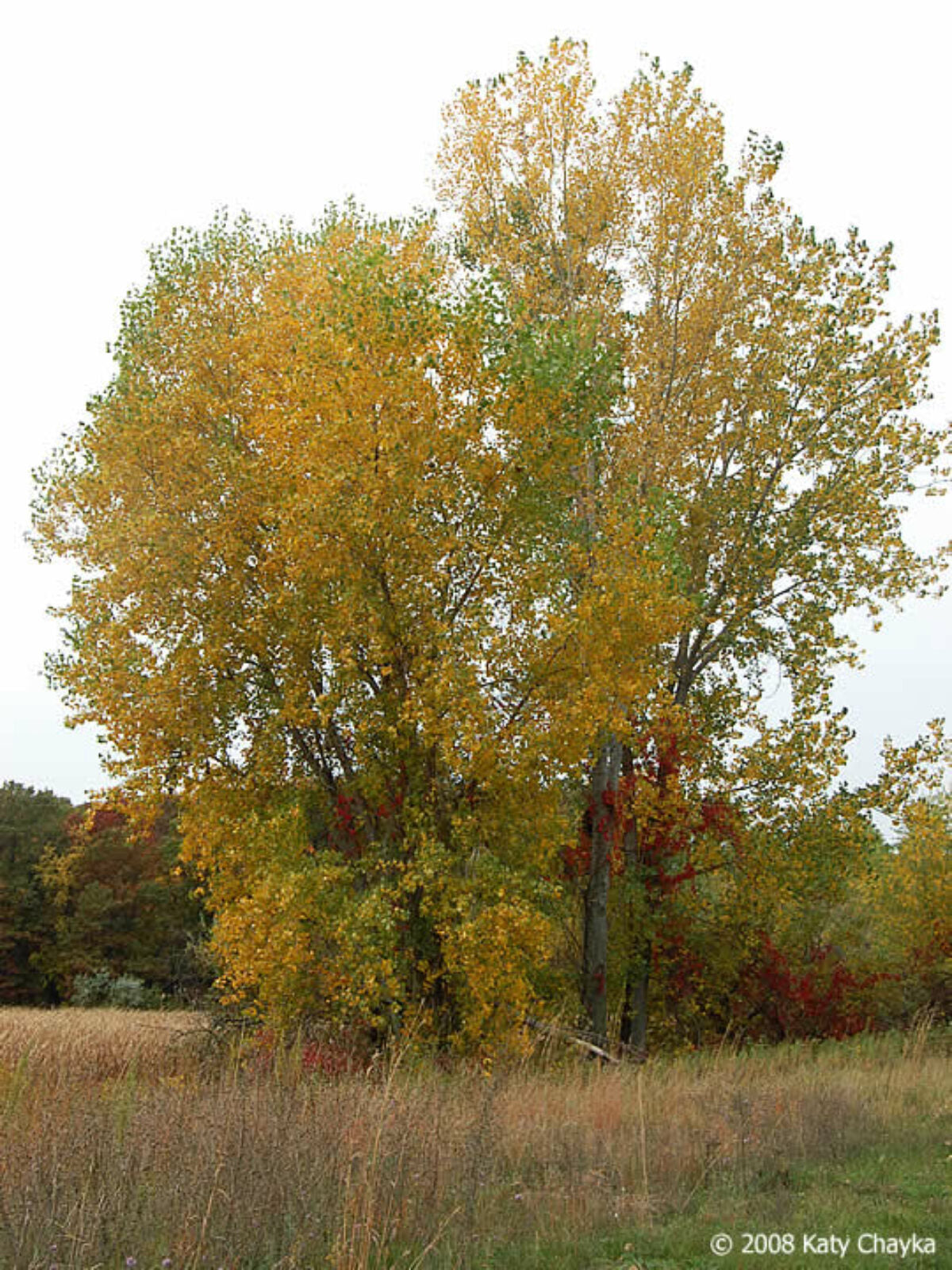
Foliage / Flowers: Large triangular green leaves with coarse teeth; bright yellow fall color. Male clone, produces pollen catkins but no cottony seed.
Light Requirements: Full sun
Growth Rate: Fast to very fast
20-year Height: 50–70 feet tall (with 30–50 ft spread depending on spacing and site quality)
Elevation Range: Up to 6,500 feet
Cold Hardiness: Zone 3–8
Wind Tolerance: High, commonly planted for windbreaks and shelterbelts
Soil Preference: Prefers deep, moist, well-drained loams or sandy alluvial soils; tolerates heavier clays if moisture is adequate. Performs poorly on shallow or droughty sites
Alkali / Saline Soil Tolerance: Low to moderate tolerance
Life Span: 40–75 years (shorter in harsh or dry sites)
Minimum Annual Precipitation: 16–18 inches (supplemental irrigation improves establishment and growth)
Drought Tolerance: Low to moderate, requires consistent moisture, especially during establishment
Windbreak Spacing: 12–16 feet between trees within rows; 20–30 feet between rows if multi-row planting
Potential Pests / Disease: Susceptible to leaf rusts, cankers, cytospora, cottonwood borer, aphids, and leaf beetles; breakage possible in severe wind or ice
Deer Resistance: Low, highly palatable to deer and livestock when young
Wildlife Value:
• Provides nesting habitat for birds
• Valuable shade and riparian stabilization
• Buds and twigs browsed by wildlife
• Pollinator support via early-season pollen