DNRC Montana Conservation Seedling Nursery
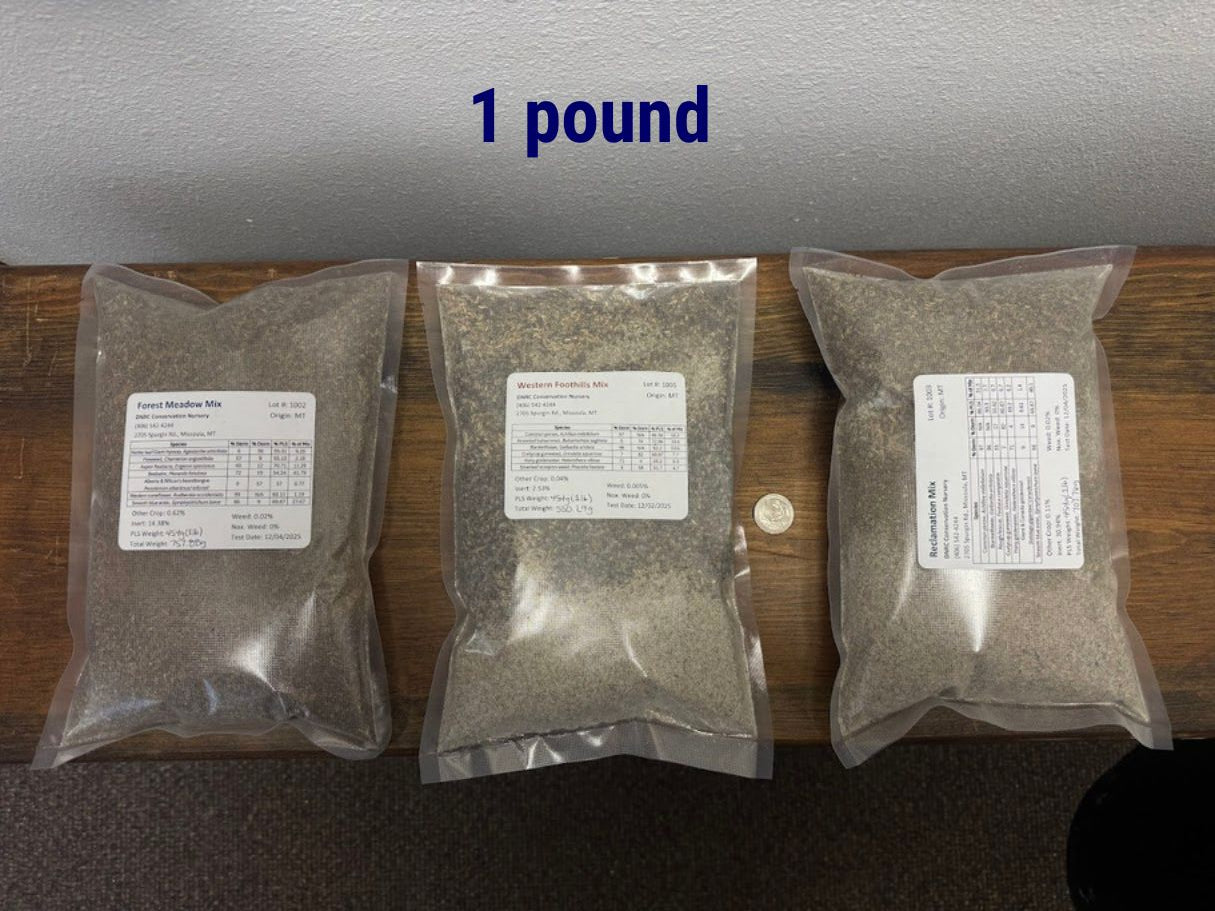
Mix - Reclamation (Seed)
Mix - Reclamation (Seed)
Out of stock
Ecoregions: 15 - 17 (Level III)
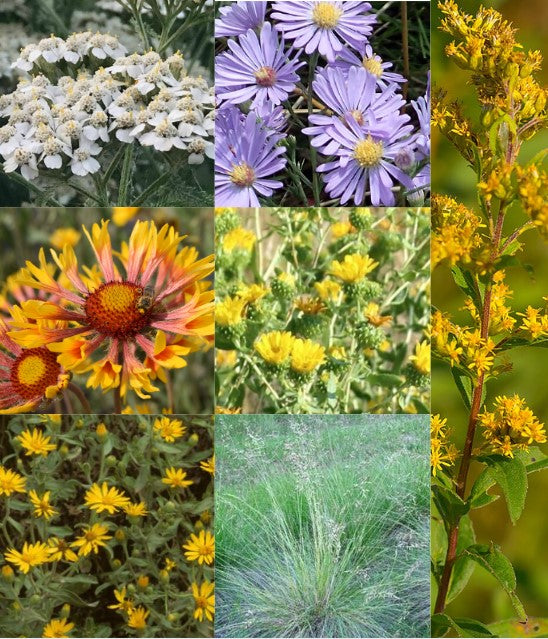
This mix combines our most aggressive forbs with a bunchgrass component to provide long-lasting color, structure, and ecological function in open, sunny sites. Bloom spans from late spring through early fall, supporting pollinators while improving habitat diversity and soil stability. Designed for dry to moderately moist, well-drained soils, this mix performs well in prairies, dry transitional zones, and roadsides. This is our broadest mix.
Mix Composition
31% Achillea millefolium (Yarrow)
7% Gaillardia artistata (Blanketflower)
0.5% Festuca campestris (Rough fescue)
6% Grindelia squarrosa (Curly cup gumweed)
6% Heterotheca villosa (Hairy golden aster)
2% Solidago gigantea/ canadensis (Gigantic and Canada goldenrod)
46% Symphyotrichum laeve (Smooth blue aster)
Natural Habitat: Dry to slightly moist grasslands, prairies, foothills, and open slopes. This mix is well suited to open, sunny sites including rangelands, roadsides, and disturbed or restored grassland habitats across a wide range of soil conditions.
Life Cycle: Perennial
Rhizomatous: Mixed (includes clump-forming grasses and forbs, as well as rhizomatous species)
Light Requirements: Full sun
Bloom Time: Late spring through early fall
Bloom Color: White, yellow, orange, and blue to lavender
Height: 12 to 48 inches
Elevation Range: Up to approximately 8,000 ft
Cold Hardiness: Zone 3 – 7
Soil Preference: Adaptable to well-drained sandy, loamy, or rocky soils. Several species tolerate dry, low-nutrient soils, while others perform well in moderately moist conditions. Overall best performance occurs in open, well-drained grassland sites.
Alkali/Saline Soil Tolerance: Moderate tolerance to alkaline soils; low tolerance for saline soils.
Minimum Annual Precipitation: 10 – 18 inches
Drought Tolerance: Moderate to high once established
Disturbance: Establishes readily in disturbed areas such as roadsides, reclamation sites, and degraded rangelands, while also persisting in stable native prairie and grassland communities.
Potential Pests/Disease: Generally low pest and disease pressure. Some foliar diseases may occur under prolonged wet conditions but rarely impact long-term stand health.
Deer Resistance: Low to moderate (varies by species)
Wildlife Value:
• Provides season-long forage and habitat for pollinators, including native bees and butterflies, and supports grassland wildlife through structural diversity