Natural Habitat: Moist to wet areas, riparian zones, streambanks, meadow edges, marshes, swamps, fens; also found in open woods and thickets
Foliage / Flowers:
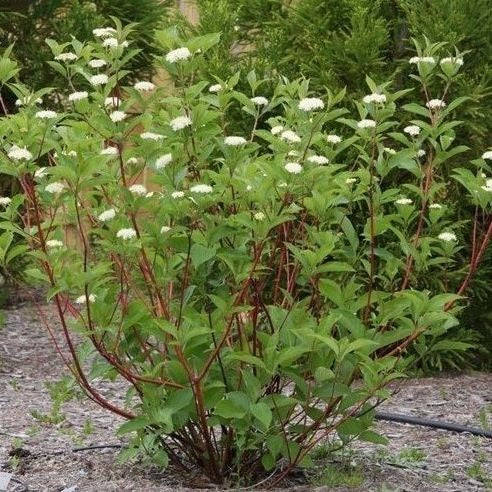
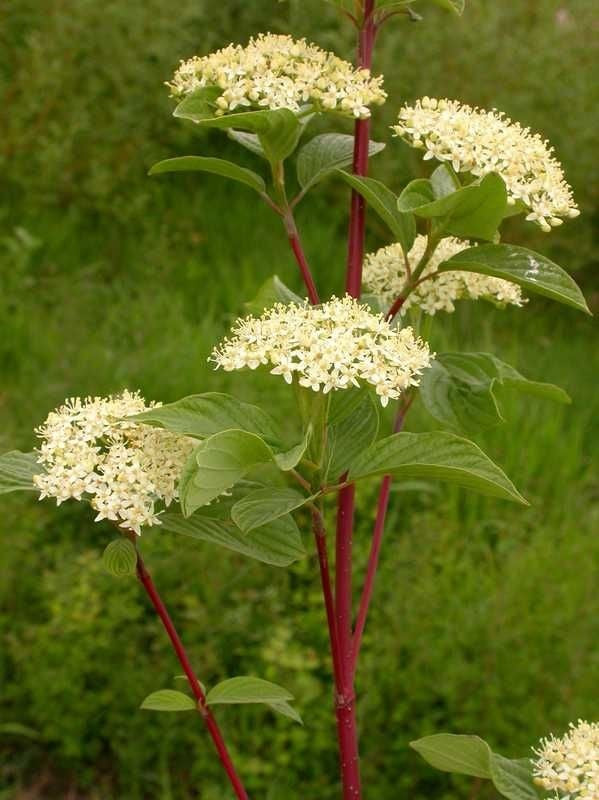
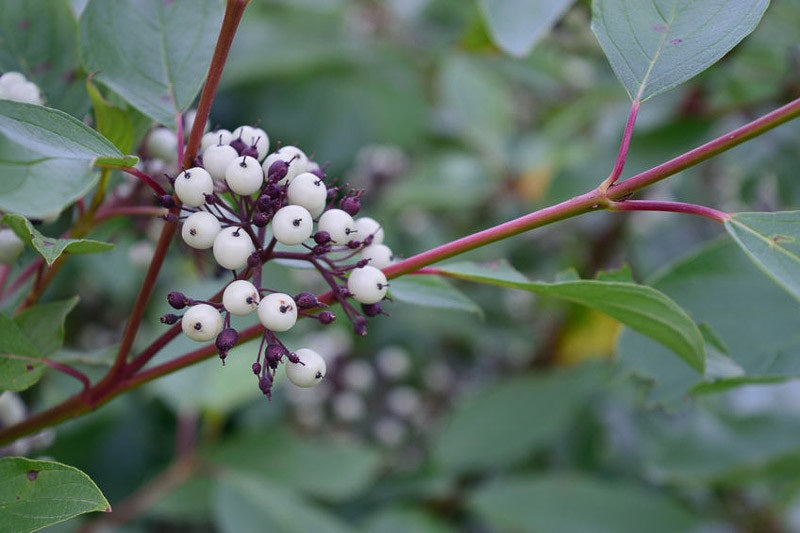
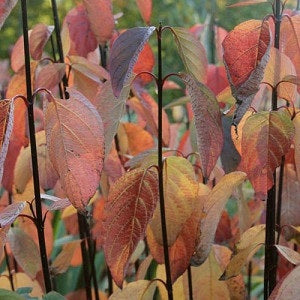
Deciduous broadleaf shrub growing 6–15 ft (commonly 6–8 ft). Leaves opposite, oval, dark green above. White to creamy flat-topped flower clusters bloom in late spring. Berries ripen in late summer, transitioning from white to blue‑tinged.
Light Requirements: Full sun to partial shade
Growth Rate: Fast, spreads via underground rhizomes and layering to form dense thickets
20‑year Height: Typically 8–12 ft; can reach up to 15 ft in optimal conditions
Elevation Range: Sea level to ~9,000 ft, commonly found in montane regions
Cold Hardiness: USDA Zones 2–7
Fire Tolerance: High, resprouts vigorously from root crown post-fire and regenerates from seed
Wind Tolerance: High, flexible branches tolerate exposure and form protective thickets
Soil Preference: Prefers moist, well-drained soils; thrives in clay, silt, loam, and organic substrates
Alkali / Saline Soil Tolerance: Moderate, tolerates alkaline soils; poor saline tolerance
Life Span: Moderate, typically 30–50+ years
Minimum Annual Precip: Performs well in areas with 15–40 in annual moisture
Drought Tolerance: Medium, established plants tolerate some seasonal dryness
Windbreak Spacing: 3–6 ft apart to form erosion-control thickets
Potential Pests / Disease: Aphids, spider mites, caterpillars, dogwood borer, leaf spot diseases, powdery mildew
Deer Resistance: Low, foliage and new growth browsed by deer, elk, moose, rabbits
Wildlife Value:
- Early-season nectar source for bees, wasps, flies, and butterflies
- Berries eaten by many bird species and small mammals
- Larval host for butterfly and moth species
- Dense stems offer nesting, perching, and escape cover