DNRC Montana Conservation Seedling Nursery
Rocky Mountain Maple
Rocky Mountain Maple
Out of stock
*ORDERING QUANTITIES - our seedlings are sold in bulk*
10 - 27 cu. in. seedlings are sold in bundles of 24 (1 unit = 24 seedlings)
100 & 175 cu. in. seedlings are sold in bundles of 9 (1 unit = 9 seedlings)
----------------------------------------------
Natural Habitat: Common in mountain forests, stream corridors, moist draws, canyon bottoms, and north-facing slopes. Often found as an understory species in mixed conifer forests and riparian woodlands.
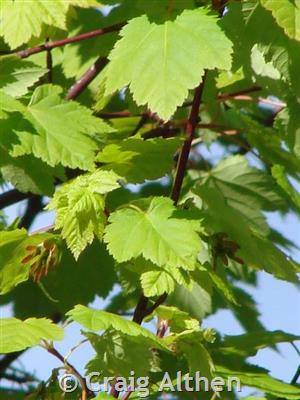
Foliage / Flowers: Deciduous large shrub to small tree with smooth gray bark and three-lobed bright green leaves turning yellow to orange-red in fall. Small yellow-green flowers in spring followed by paired winged samaras.
Light Requirements: Partial shade to full sun; best growth with some protection from intense afternoon sun in drier sites.
Growth Rate: Slow to moderate.
20-year Height: 12–20 feet tall (multi-stemmed form common).
Elevation Range: 3,000–9,000 feet.
Cold Hardiness: Zone 3–7.
Wind Tolerance: Moderate, benefits from some shelter, especially at higher elevations.
Soil Preference: Prefers moist, well-drained loam soils rich in organic matter; tolerates sandy or gravelly soils if moisture is adequate. Does not perform well in compacted or dry soils.
Alkali / Saline Soil Tolerance: Low tolerance.
Life Span: 60–100+ years.
Minimum Annual Precipitation: 18–25 inches (or supplemental moisture from snowmelt or streams).
Drought Tolerance: Low to moderate — performs best with consistent soil moisture.
Windbreak Spacing: Not typically used as a primary windbreak species; spacing 8–12 feet if used in shelter or habitat rows.
Potential Pests / Disease: Verticillium wilt (occasionally), aphids, leaf miners, powdery mildew; generally few serious issues in native settings.
Deer Resistance: Low to moderate, commonly browsed by deer and elk.
Wildlife Value:
• Excellent browse for deer, elk, and moose
• Provides nesting cover and shade
• Seeds eaten by birds and small mammals
• Important riparian and understory habitat species