1
/
of
6
DNRC Montana Conservation Seedling Nursery
Woods' Rose
Woods' Rose
Regular price
$72.00 USD
Regular price
Sale price
$72.00 USD
Unit price
/
per
Out of stock
*ORDERING QUANTITIES - our seedlings are sold in bulk*
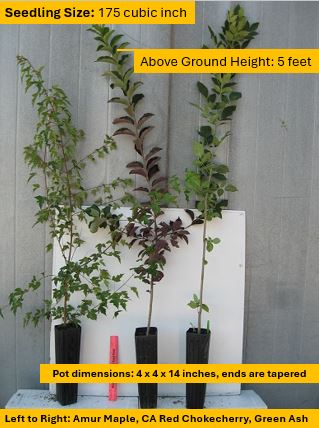
10 - 27 cu. in. seedlings are sold in bundles of 24 (1 unit = 24 seedlings)
100 & 175 cu. in. seedlings are sold in bundles of 9 (1 unit = 9 seedlings)
-----------------------
Rosa woodsii
Natural Habitat: Open woods, plains, streambanks, stony slopes, disturbed sites, mixed-conifer and subalpine forests
Foliage / Flowers: Multi-stemmed deciduous shrub 3–10 ft tall (commonly 3–6 ft), with pinnate leaves (5–9 leaflets ~¾–2 in long); fragrant pink blossoms 1–2 in across in late spring; followed by red rose hips ½–¾ in long that persist into winter
Light Requirements: Full sun to partial shade
Growth Rate: Moderate to rapid, spreading via root suckers and layering
20‑year Height: Typically 6–10 ft, forms dense thickets over time
Elevation Range: Sea level to 11,200 ft (common up to high-elevation forests)
Cold Hardiness: USDA Zones 2–9; tolerates ~–40 °F
Fire Tolerance: High – resprouts vigorously from root crown and regenerates by seed after fire
Wind Tolerance: High; tolerates exposure and forms dense patches
Soil Preference: Adaptable, well-drained sandy to clay loams; prefers moderate moisture; tolerates acidic to slightly alkaline conditions (pH 5.5–8.0)
Alkali / Saline Soil Tolerance: Moderate alkali tolerance, low saline tolerance
Life Span: Perennial shrub, often 20–50 years (can persist longer in ideal conditions)
Minimum Annual Precip: Thrives in areas with ≥10–18 in of annual moisture
Drought Tolerance: Medium once established; adaptable to variable moisture
Windbreak Spacing: For restoration, space 4–8 ft apart to form protective thickets
Potential Pests / Disease: Aphids, spider mites, caterpillars, fungal rusts and leaf spots, powdery mildew
Deer Resistance: Low, browsed by deer, elk, moose, rabbits, small mammals
Wildlife Value:
- Food source for a variety of wildlife
- Dried rose hips are a winter food source
- Source of food for native insects and pollinators